Forest and Society
Forest and Society. At a time when our state is shaking to its foundations, it would be good to simplify the understanding of processes in the forest and take them as a metaphor. How should we behave within one community, one state. While creating the performance How Trees Talk, a world beneath the surface of the forest opened up to me and I discovered so many interesting things that I started studying it all.
And I feel the need to share with you my thoughts on how the processes in nature are similar to those situations in society. And I wonder why we are so out of balance, when all of nature has been testing for millions of years how to maintain its functioning communities and move on.
A normal, healthy forest lives happily in symbiosis with one another.
A healthy forest is based on the ability to survive. It is about cooperation and interconnectedness, which underpins the development, reproduction, and diversity of plants and animals, such as trees, animals, and mushrooms, in the conditions of the gifts of the earth in a given area. Water, sun, minerals, wind, rain… these are truly gifts of the earth. And we should be aware of this every day. Obligations are natural tasks of individual members of the forest. Someone feeds others, someone extracts minerals and brings water, someone cleans the forest, etc.
They also cooperate in climate change, so these changes are an impulse for them to change their cooperation.
For example: …Bacteria and ants, mother tree and mycorrhizal fungi… birds and trees, overpopulation of one species of animal, logging, development of forest areas, drying of wetlands. The last are changes in the forest ecosystem caused by humans and of course there is much more…
But plants, trees, soil and animals help each other to survive even when external conditions have changed. They look for help, a way out and, most importantly, try to establish BALANCE again and again.
Mother trees in the forest, which tend to be the oldest and largest - support their children and trees that are beneficial in specific conditions and then all organisms that are beneficial to the ecosystem.
From this, stability and prosperity grow again. BUT for all participants. Not prosperity for one and languishing for the other.
Therefore, mother trees do not support trees, shrubs, weeds, which suck up soil, water and resources, pollute ... or directly destroy.
This keeps the forest in balance and could be a model for us.
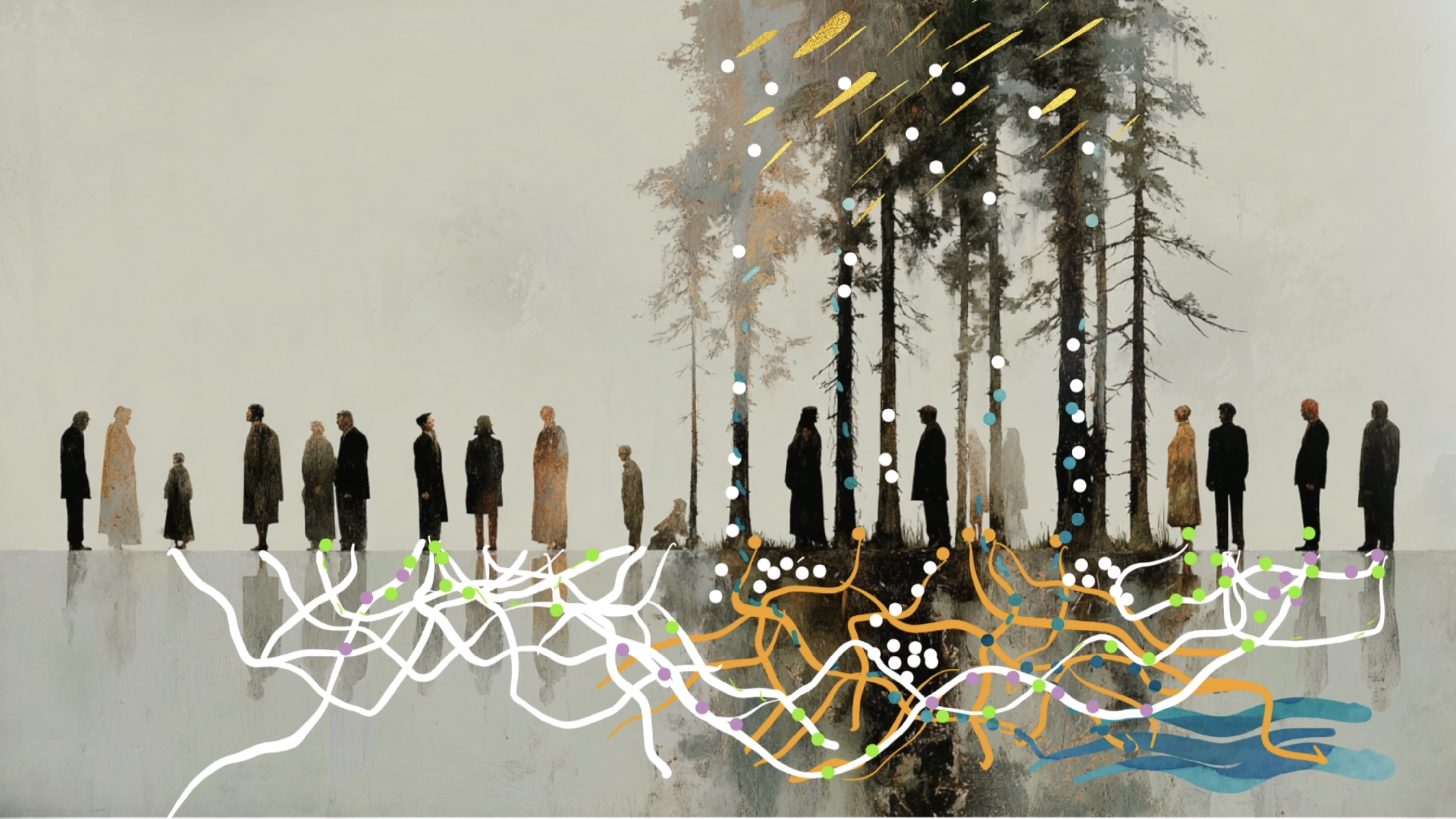
Plants in the forest communicate in complex ways thanks to the underground "Wood Wide Web". Thanks to fungal networks (mycorrhiza) for the exchange of nutrients and signals, by releasing chemicals (scents) into the air to warn of pests and attract pollinators, and also using micro RNA.. Communication includes sharing resources, warning, helping seedlings (mother trees) and predicting future conditions, which ensures the stability of the entire ecosystem.
The quality of maintaining balance does not depend only on one mother tree, but on a set of living organisms for which order is maintained in the forest. Not only one species of plants or animals must thrive, because their tasks are diverse - and everyone can do something different - everyone must thrive. And they must cooperate.
So everyone must communicate together:
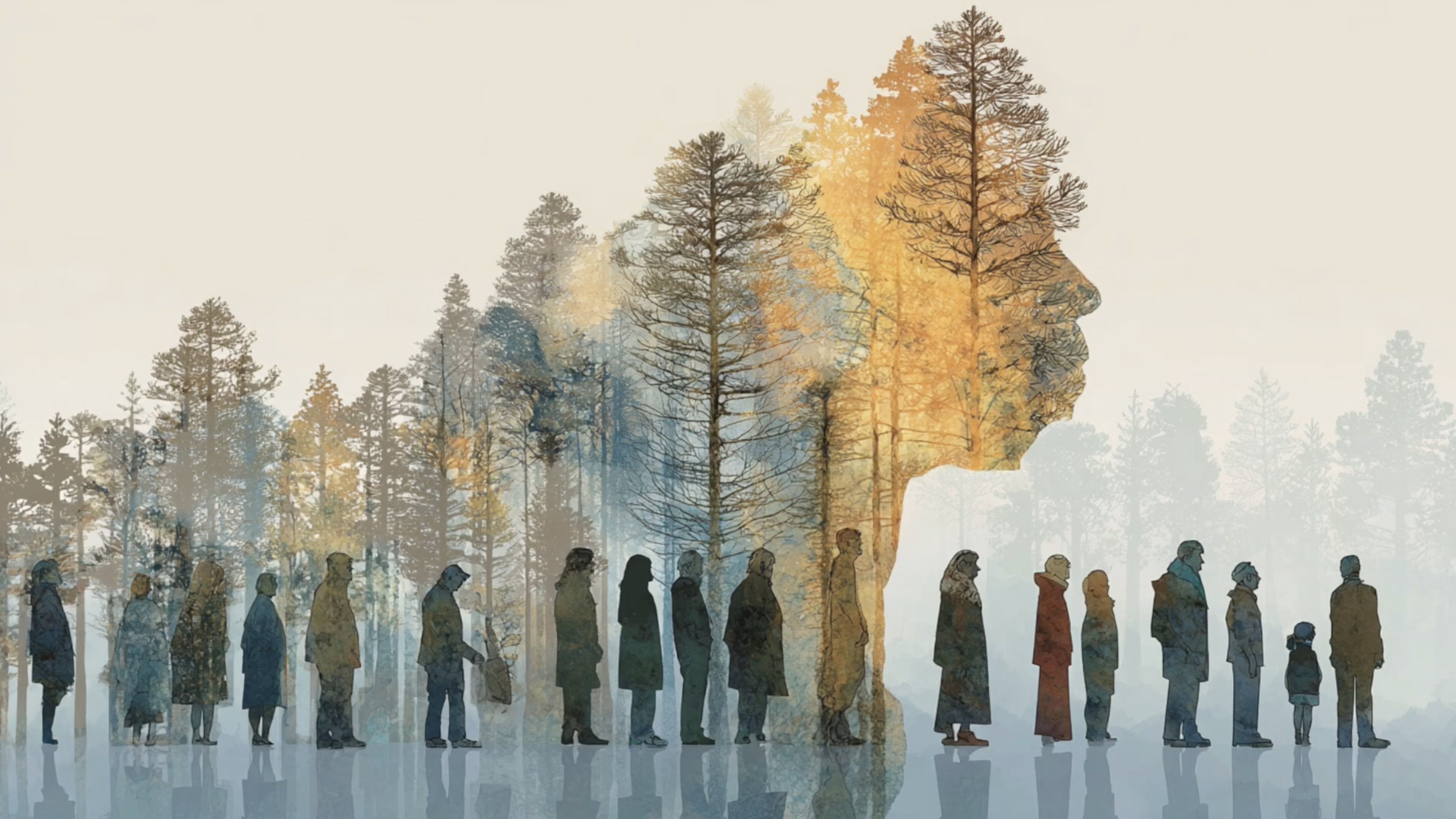
Imagine a society as a dense forest, where each individual (citizen) represents different types of trees, bushes and herbs. - teacher, doctor, digger, writer, painter, garbage collector, chemist, politician, accountant, etc.. So each plant has its own unique role and contributes to the overall biodiversity of the forest, which symbolizes the diversity of opinions, values and cultures as in a democratic society. And this is welcome in the forest and should be welcome in society as well.
Plants (individuals) are like people who can go through a demanding life, looking for water and nutrients (resources). Each of us, like a plant, can face difficulties and lack of resources. However, when they connect with mycorrhizal fungi, they receive support and access to what they need. But they must also have something to offer... This is where creativity comes in. Not just artistic, but creativity in thinking and problem-solving.
Think about what is the connecting network in society...????
The quality of democracy is not measured by the strength of the government, but by the strength of the society that keeps it in balance - said Nobel Prize winner Daron Acemoglu.
Civic space creates the conditions in which people and organizations can act freely, associate, express opinions, help others, and participate in public affairs: these are local associations, informal initiatives, but also professional organizations. They connect people and their interests and translate it further.
Each of us - we are the small, persistent threads that grab onto where the hands of the state or the market cannot reach - and weave together a place where people live well from the villages, regions and countries.
The Tineola Theatre performs a performance for schools: How Trees Talk to Each Other, where it playfully and visually brings the invisible world beneath the surface of the forest closer and discusses it with children...

Jestli vás zajímá a baví divadlo netradičních forem: vizuální, poetické, digitální, hravé i vážné s živou kresbou na scéně, napište: